Food Service & Restaurants
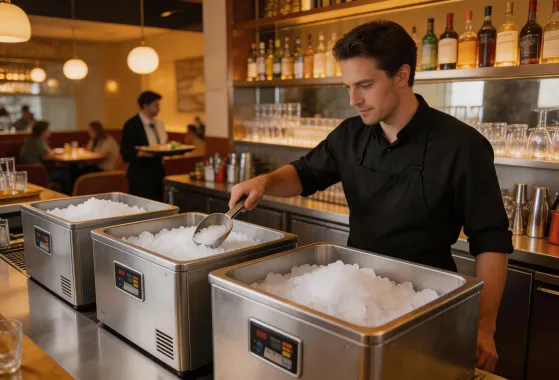
Restaurants, hotels, and catering operations require consistent ice supply with zero contamination risk. FrostLine cube and nugget ice machines deliver 50 to 1,500 kg/day with antimicrobial components and automatic self-cleaning cycles that comply with health department sanitation codes.
Typical deployment: A 200-seat full-service restaurant with bar typically requires 400–600 kg/day of cube ice. FrostLine specifies a modular head unit with 500 kg/day rated capacity (per AHRI 810 at 21°C/10°C conditions), paired with a 250 kg insulated storage bin. At peak summer operation (ambient 35°C), actual output drops to approximately 420 kg/day — a 16% derating that must be factored into the sizing calculation. Water filtration with 1-micron sediment and activated carbon stages is required to protect the evaporator and maintain ice clarity.
- NSF/ANSI 12 certified ice contact surfaces
- Built-in antimicrobial protection on door gaskets and ice chutes
- Undercounter, modular head, and dispenser configurations
- Quiet operation (below 52 dB) for front-of-house installations
Seafood & Fishery Processing
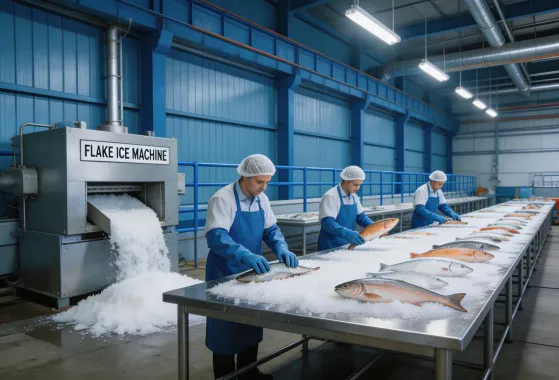
The seafood industry requires massive volumes of flake or slurry ice to maintain product quality from boat to processing plant to retail shelf. FrostLine industrial flake ice machines produce 5 to 80 tons/day with seawater-compatible evaporators and corrosion-resistant titanium options.
Typical deployment: A medium-scale shrimp processing facility handling 30 metric tons of raw product daily requires approximately 15–20 tons of flake ice for initial chilling (ice-to-product ratio of 1:2 by weight) plus 3–5 tons for display and packaging. FrostLine installs two 15 ton/day flake ice units with seawater-rated titanium evaporators (operating at -22°C evaporating temperature) feeding a 40-ton insulated ice storage silo with screw conveyor delivery to the processing floor. Total installed power: approximately 120 kW per unit at R-717 ammonia refrigerant.
- Flake ice with sub-zero surface temperature for rapid chilling
- Seawater and brackish water evaporator options
- Stainless steel 316L and titanium for marine environments
- Modular ice storage bins from 5 to 200 tons capacity
Healthcare & Pharmaceutical
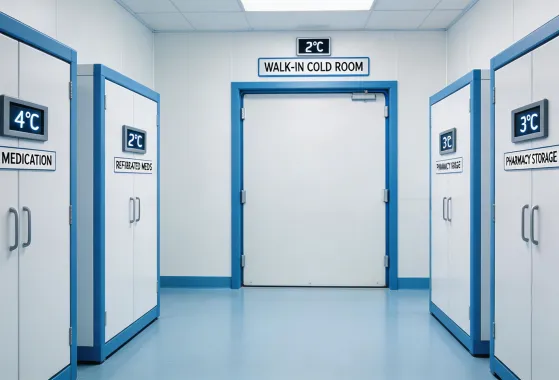
Hospitals, blood banks, and pharmaceutical distributors require refrigeration systems with precise temperature control, redundant backup, and full audit trail documentation. FrostLine cold storage units maintain ±0.5°C stability with dual-compressor failover and continuous data logging.
- ±0.5°C temperature stability across the entire chamber
- Dual-compressor redundancy with automatic failover
- 21 CFR Part 11 compliant data logging and alarm systems
- Battery backup for critical alarm and monitoring functions
Cold Chain & Logistics
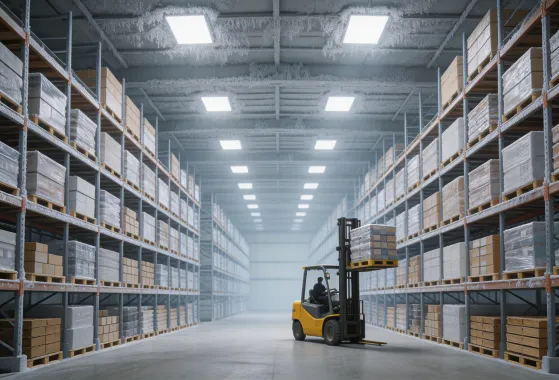
Third-party logistics providers and food distributors need high-capacity cold storage with rapid pulldown capability and energy-efficient steady-state operation. FrostLine modular cold rooms and blast freezers scale from 50 m³ to 10,000 m³ with zoned temperature control.
Typical deployment: A 5,000 m³ multi-temperature distribution center requires three independently controlled zones: +2°C chilled storage (dairy, produce), -18°C frozen storage (meat, seafood), and -25°C deep-freeze (ice cream, specialty items). FrostLine configures separate refrigeration circuits per zone with R-448A low-GWP refrigerant, variable-speed scroll compressors delivering combined cooling capacity of 850 kW, and IoT-connected monitoring pushing temperature/humidity/door-open data to a cloud dashboard at 60-second intervals. Calculated energy consumption: 180–220 kWh per m³ per year at the target temperature profiles.
- Rapid pulldown to -35°C in under 4 hours
- Variable-speed compressors for 30% energy savings at steady state
- Modular panel construction for phased expansion
- IoT-enabled remote monitoring with cloud-based dashboards
Hospitality & Hotels
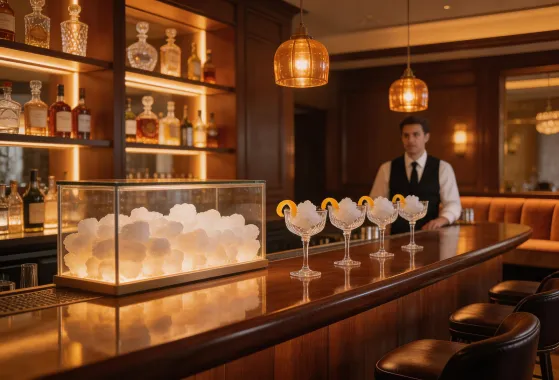
Hotels, resorts, and event venues need quiet, reliable ice dispensers on every floor and high-capacity machines in banquet kitchens. FrostLine undercounter and dispenser models operate below 48 dB with touchless dispensing for guest-facing installations.
- Undercounter models under 48 dB for guest floor deployment
- Touchless infrared dispensing for hygiene-conscious operations
- Nugget, crescent, and sphere ice for premium beverage programs
- Remote monitoring for multi-property fleet management
Industrial & Construction
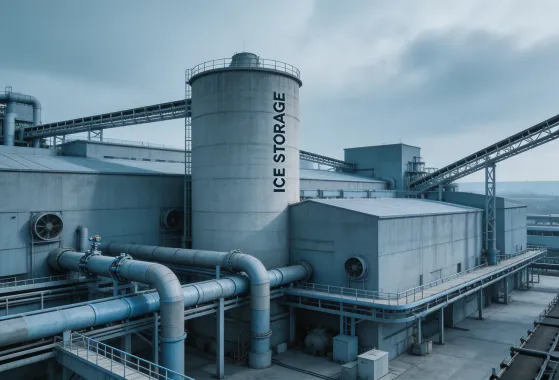
Concrete batch plants, mining operations, and chemical processors use large-scale ice to control reaction temperatures and maintain process consistency. FrostLine industrial ice plants deliver 20 to 80 tons/day with automated ice delivery systems and silo storage.
- Flake and tube ice at 20–80 tons/day capacity
- Automated ice weighing and delivery conveyors
- Insulated ice storage silos up to 200-ton capacity
- Designed for outdoor installation in harsh environments